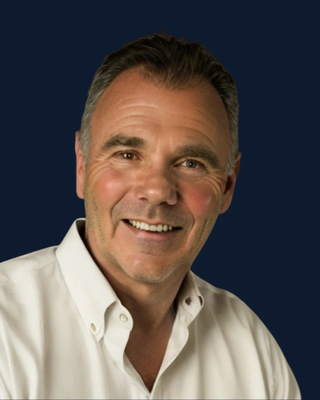
Brett Thomas
Cofounder & Chief Learning Officer
Brett has spent 27 years advising, coaching, mentoring, and consulting founders and executive leaders as their companies grow more complex. Across more than 20,000 hours working directly with founders, two leadership academies, and 20 published books, his work has centered on one question: what must a leader become capable of as the enterprise around them evolves? Today, he combines that founder-leadership depth with AI systems architecture to help companies build the capabilities their next stage requires.
Founder, Integral Corporation
For most of my adult life, I’ve been obsessed with one question:
Why do some founders keep growing into the companies they’re building, while others eventually become the constraint on them?
Different personalities. Different industries. Different business models. Different stages of growth. But the same patterns kept showing up.
The founder who once knew almost everything eventually couldn’t. The founder who once made every important decision eventually became the place where too many decisions accumulated. The instincts and judgment that created the company eventually had to become leadership capability other people could carry.
What I came to understand is simple:
Every new stage of a company asks something new of its founder.
That doesn’t mean the founder became inadequate. It means the job changed. The complexity changed. What made someone extraordinary at building one stage of the company isn’t automatically what will make them extraordinary at leading the next.
That became my work: helping founders expand their leadership range, build stronger leadership teams, distribute authority, and create organizations capable of carrying more without requiring the founder to personally carry everything.
Over time, I codified what I was learning through leadership academies and books on founder leadership, organizational development, scaling, execution, change, and artificial intelligence.
Then AI changed the equation.
For most of my career, increasing organizational capability meant developing people and adding human capacity. AI created another possibility: knowledge, organizational memory, analysis, decision support, and selected forms of execution could become persistent capabilities of the enterprise itself.
I didn’t become interested in AI because I wanted a second career in technology. I became interested because AI changed what a founder-led company could become.
Today I design AI systems and agentic architectures that turn a company’s knowledge, workflows, intellectual property, and operating logic into organizational capability.
When I look at a founder-led company, I’m looking at what the next stage is asking of the founder, what still depends unnecessarily on that founder, what capability is missing in the enterprise, and where AI can create real leverage rather than simply automate activity.
The best work I’ve ever done has never made a founder more dependent on me. It has made them more capable without me.
What I bring to the table
I understand founders. After decades across the table from them, you develop a pattern library you can’t get from a certification or framework. I understand how psychology, leadership, teams, culture, authority, and execution interact as an enterprise scales.
I also understand AI architecture. I build systems that extend organizational intelligence, preserve knowledge, and increase capacity.
And I bring Integral Corporation. Integral Associates develops leaders and organizations. Integral Digital builds AI systems and software. Integral Agency builds positioning, content, go-to-market, and customer-acquisition capability. Integral Publishing turns intellectual property into books, white papers, and scalable knowledge products.
When I joined Alethia as Cofounder and Senior Partner, I brought those capabilities with me.
I bring a unique perspective on organizational leadership and an ability to connect human development, organizational capability, and intelligent systems.
Where my team completes me
I see possibilities quickly. My mind naturally moves toward patterns, architecture, and what something could become several moves from now.
That’s useful. It can also mean I see ten things we could build when the company needs ruthless focus on the two things we must build next.
Joe sees how the system is actually behaving now. He reads the people, relationships, culture, process, and friction underneath the architecture and makes sure what we design will hold.
Travis makes it move. He turns ideas into ownership, cadence, commitments, accountability, and execution.
I can help see what the founder and enterprise need to become next. Joe sees how the system is behaving now. Travis makes sure we close the distance between the two.
That’s why Alethia matters to me.
Every next stage asks something more of the founder. My work is helping them become capable of it.